Biodegradable Clear Cellophane - An Easy Sustainable Switch for Every Florist
We know not all sustainable floristry products are ideal for every business, however, this one really has no draw backs. It’s a logical step to make your business, and in turn its environmental credentials, that bit greener.
It’s fair to say that the vast majority of florists use clear film (as it’s officially called) or cellophane (as it’s better known). Opting for this biodegradable version is a sustainable option that’s perfect for gifting and aqua-packing your bouquets without having to change the way you work at all.
Perhaps you’ve been using the biodegradable clear film for years, or perhaps this is the nudge for you to make the seamless sustainable switch.
In this article, we’ll provide all the ecological details you need — whether that’s to become better informed yourself, to share the knowledge with your team, or to confidently explain it to your customers. So, let’s begin…
About Biodegradable Clear Film Rolls
All our Biodegradable Clear Cellophane isn’t just labelled biodegradable; we’ve checked to ensure it meets high standards and has clear, reputable certification, so we can all be confident there is absolutely greenwashing.
Whilst it’s common to see products and packaging labelled as biodegradable — meaning the item can break down naturally and safely in a short time —unfortunately there is no legal requirment for certification. This can lead to some manufacturers opting to label products as biodegradable, even when it takes years or decades to fully break down; claims that don’t match what the consumer believes they’re getting.
This is why certification is so important. It ensures environmentally responsible companies achieve sustainability goals and reassures consumers that they’re buying verified sustainable products.
The standards our Biodegradable Clear Film Rolls meet
All our Biodegradable Clear Film Rolls are ASTM D5511 / ISO 15985 certified. This certification guarantees high standards in meeting biodegradability requirements.
More information on the biodegradability standards required to achieve this certification can be found in the FAQ section further down this page.
Verified Biodegradability Testing
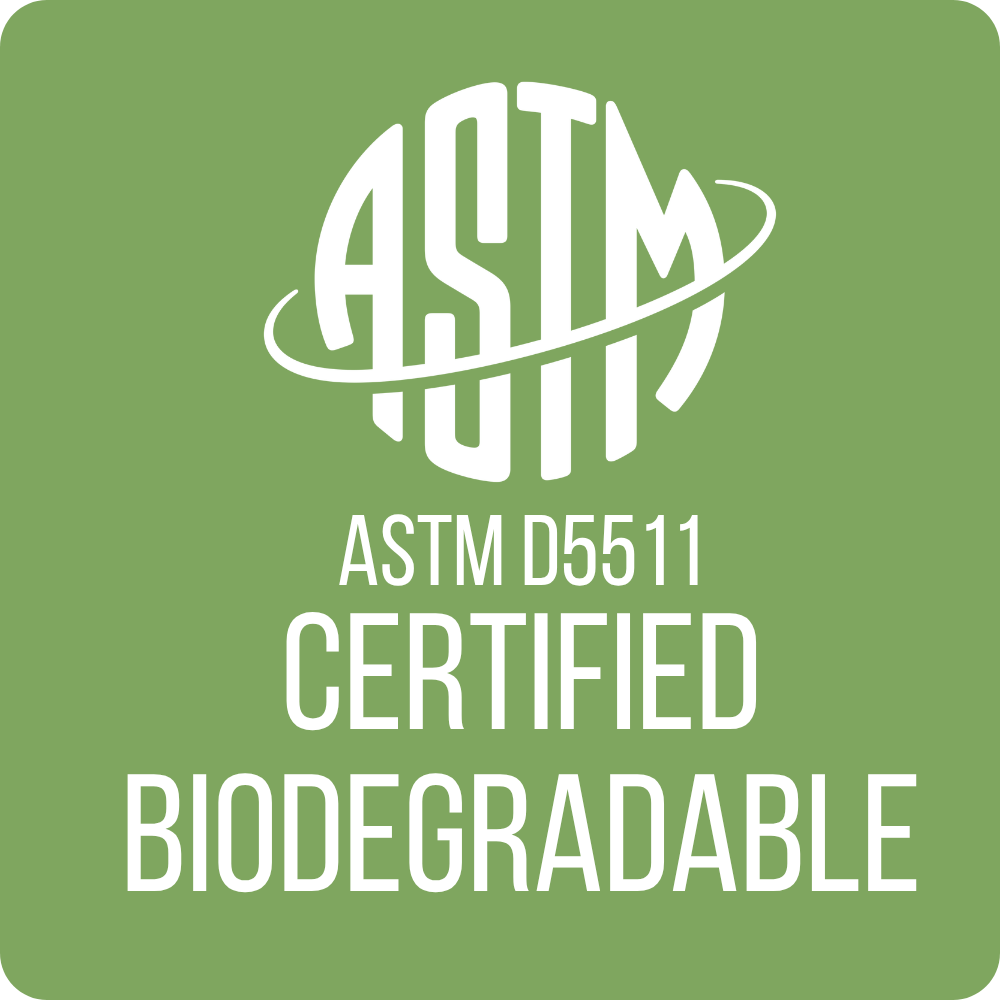
ASTM (American Society for Testing and Materials) is a globally established and reputable developer of testing methods. ASTM D5511 certifications were established by the ASTM to determine the anaerobic biodegradation (the degradation of compounds by microorganisms in the absence of oxygen) of plastics in accelerated landfill conditions.
ISO (International Organisation for Standardisation) is a worldwide, non-governmental organisation that develops international standards. ISO 15985 is an international standard that specifies a laboratory method to determine the ultimate anaerobic biodegradation of plastic materials under high-solids conditions.
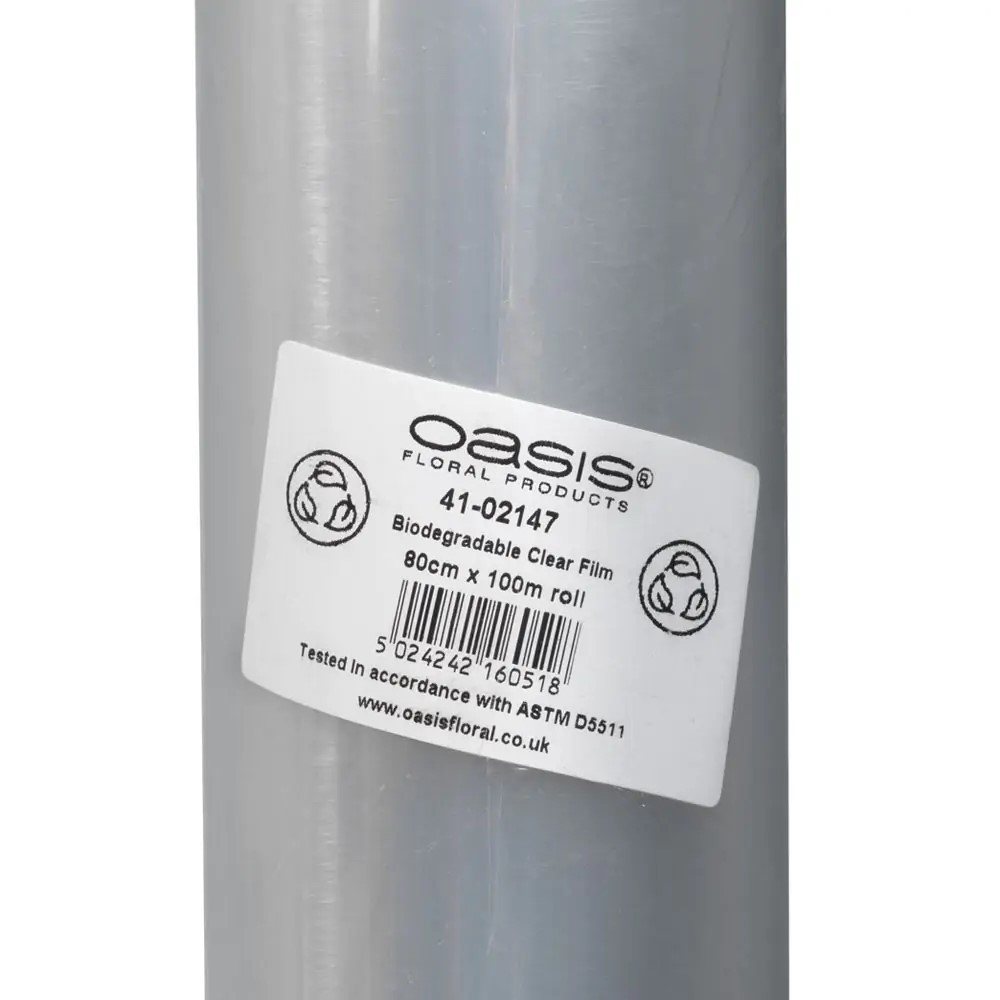
- 70.73% biodegradability achieved within 24 days. 91.73% biodegradability achieved after 45 days.
- Waterproof and durable
- Multiple uses, including: ongoing aquapacks, lining containers etc.
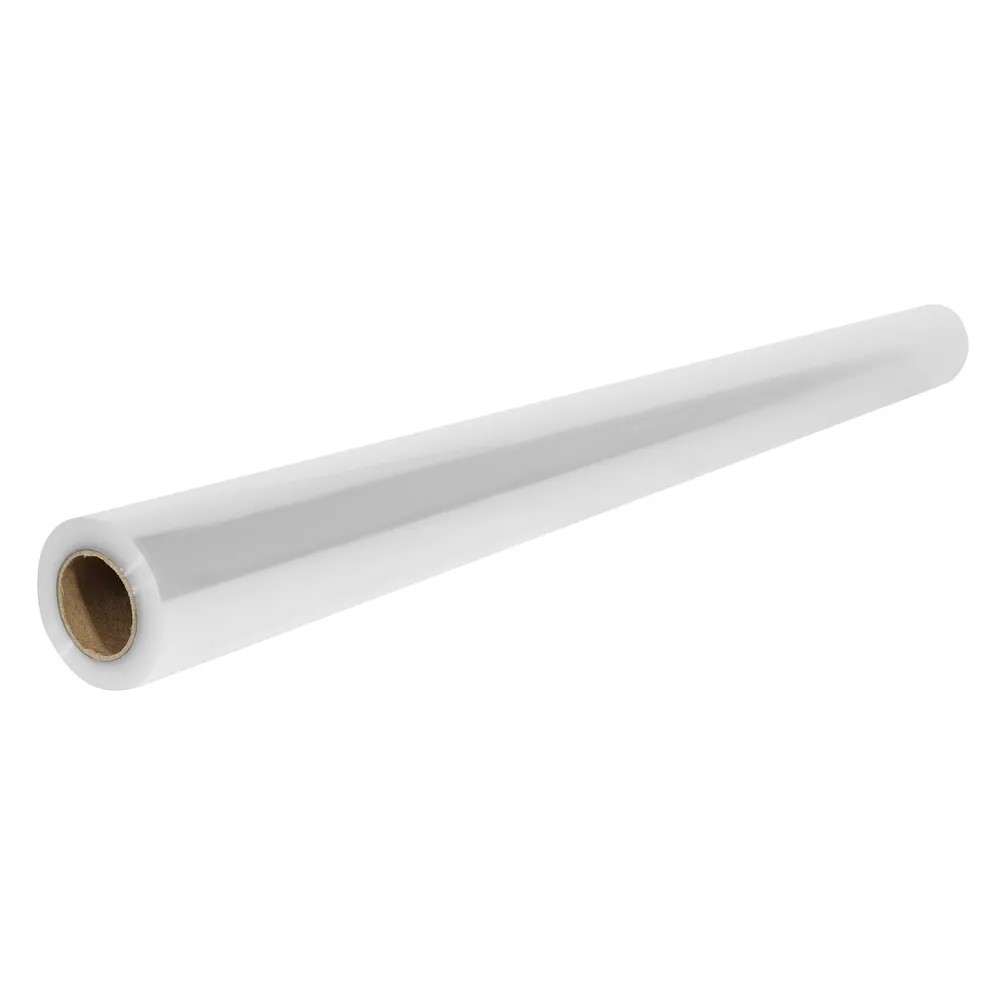
Biodegradable Clear Film Rolls Details
Sold
Per Roll
Length
50m or 100m metres long Rolls
Width
80cm wide
Other Information
Disposal:
Dispose of in general waste – Certified biodegradable under ASTM D5511 testing, which resembles biologically active landfill conditions.
Who Makes the Biodegradable Cellophane Clear Film Rolls
We source our biodegradable cellophane, along with a range of other sustainable gift wrapping products, from different manufacturers and suppliers around the world. As can be seen from the images one of these suppliers is Oasis Flora Products who have made significant product innovations and commitments as seen here.
Westflor constantly reviews our range and stockists to bring you the best, latest and most sustainable products available.
All Your Eco Questions Answered
Your customers could pose questions about this sustainable product at any time; perhaps you or your team may be wondering about certain aspects yourselves. In these FAQs we aim to pre-empt every question.
Is it suitable to hold water for a long time?
Whilst biodegradable, this cellophane performs just like standard non-biodegradable cellophane and is therefore perfect for floristry use. Its biodegradation and decomposition occur under aerobic and anaerobic solid waste treatment conditions. So you can aqua-pack and line containers with confidence, just as you always have.
Whilst we offer compostable wrapping, this is a very different product and is not waterproof, although it does provide some water resistance.
What does biodegradable mean?
Biodegradable refers to a product breaking down into natural elements, such as carbon dioxide and water vapour, through the action of organisms in an ecosystem, like bacteria and fungi. Unlike non-biodegradable materials that hang around in the environment for a long time, biodegradable materials can decompose relatively quickly without leaving behind harmful waste. According to the European Union’s standard, 90% of an object has to break down within six months for it to be called biodegradable.
What's the difference between biodegradable and compostable?
Some biodegradable items are also compostable, meaning they can break down and be turned into compost. However, ASTM D5511 and ISO 15985 certified biodegradable products are tested to meet standards that simulate solid waste treatment conditions, such as those found in active landfill environments. It’s worth noting that biodegradable is different from bio-based, which simply means something is made, at least partly, from natural materials. Oxo-degradable isn’t a term we hear too often, but it applies to plastics that break down into microplastics and remain in the environment — not a positive outcome.
What biodegradation standards are guaranteed with an ASTM D5511 / ISO 15985 certification?
ASTM D5511 / ISO 15985 certification determines the anaerobic biodegradation of plastic materials under high-solids anaerobic digestion conditions. This test method resembles some conditions in biologically active landfills where the gas generated is recovered and biogas production is actively promoted by inoculation, moisture control, and temperature control.
ASTM D5511 states that, for the test to be considered valid, the positive control (reference material) must achieve 70% within 30 days, with a deviation of less than 20% of the mean between replicates.
What standards did the Biodegradable Cellophane Clear Film meet?
The positive control (reference material) showed 70.73% biodegradability by day 24, with less than 20% difference between replicates. Furthermore, 91.73% biodegradability was achieved after 45 days.
In simple terms, this means the film has been independently tested to break down under active landfill conditions
The test result report of the Biodegradable Cellophane Clear Film
View the full test report of the Biodegradable Cellophane Clear Film HERE.
Who carried out the testing?
The tests on the Biodegradable Clear Film were carried out by Intertek, who go beyond testing, inspection and certification of products and describe themselves as a Total Quality Assurance Provider to industries worldwide. They have over 1,000 locations worldwide, and it was Intertek Testing Services Hong Kong Ltd. that carried out the testing.
How should the Biodegradable Cellophane Clear Film be disposed of?
It should be disposed of in general waste. As shared above, it’s certified biodegradable under ASTM D5511 testing, which resembles biologically active landfill conditions.
There are so many aspects about environmentally friendly products that we may not really consider. Whilst we hope we’ve tackled any questions and queries about this sustainable eco product, we’d really like to make this information as comprehensive as possible. With that in mind, if you have further questions, do get in touch at Westflor we always want to help as much as possible and would be happy to research and add more details as necessary.
In a (Sustainable) Nutshell
You’re now armed with all the information, insights and guidance to confidently use this product and know you won’t be compromising on the quality of your gift wrapping or the suitability and security in using it to waterproof and line containers, etc.
Making this simple switch will not affect how you work at all, but it will satisfy consumer demand — and probably your own — for eco-friendly products.
If you’re yet to switch to this biodegradable cellophane – is now the time? You can select it from our current stock today. Find it within our sundries categories or by search through all our Sustainable Products.